“Some amount of redundancy is necessary” (WIP)
“Some amount of redundancy is necessary” (WIP)
| transcript | YTB: [Lex Fridman] Yann Lecun: Meta AI, Open Source, Limits of LLMs, AGI & the Future of AI |
- “language (from) might represent more information because it’s already compressed and hence less redundant”
| Redundant code in error correction | Wikipedia: Redundancy (information theory) |
- Redundancy: (in information theory and data transmission)
ratio of entropy of potential states (\(H(X)\)) (i.e. statistical ensemble) and its max possible entropy value (\(\log |{\mathcal {A}}_{X}|\)) (i.e. uniform prob)
- “Informally, it is the amount of wasted ”space“ used to transmit certain data.”
| 1999 Using Redundancy to Improve the Performance of Artificial Neural Networks, pdf |
- e.g.: two brain hemispheres
- Although we now know that the two hemispheres of the brain perform vastly different functions, redundancy within the two hemispheres is still held as a viable theory of functional recovery
- e.g.: highly redundant brain
- the brain is at least twice as large as is needed for immediate survival, and the extra baggage of the normal brain simply replicates functions already present.
- Redundancy produces faster convergence, more accurate results, and more stable networks than comparable standard networks.
| 2018 arxiv: [1802.05324] Advancing System Performance with Redundancy: From Biological to Artificial Designs |
- two main requirements to design a system with redundancy:
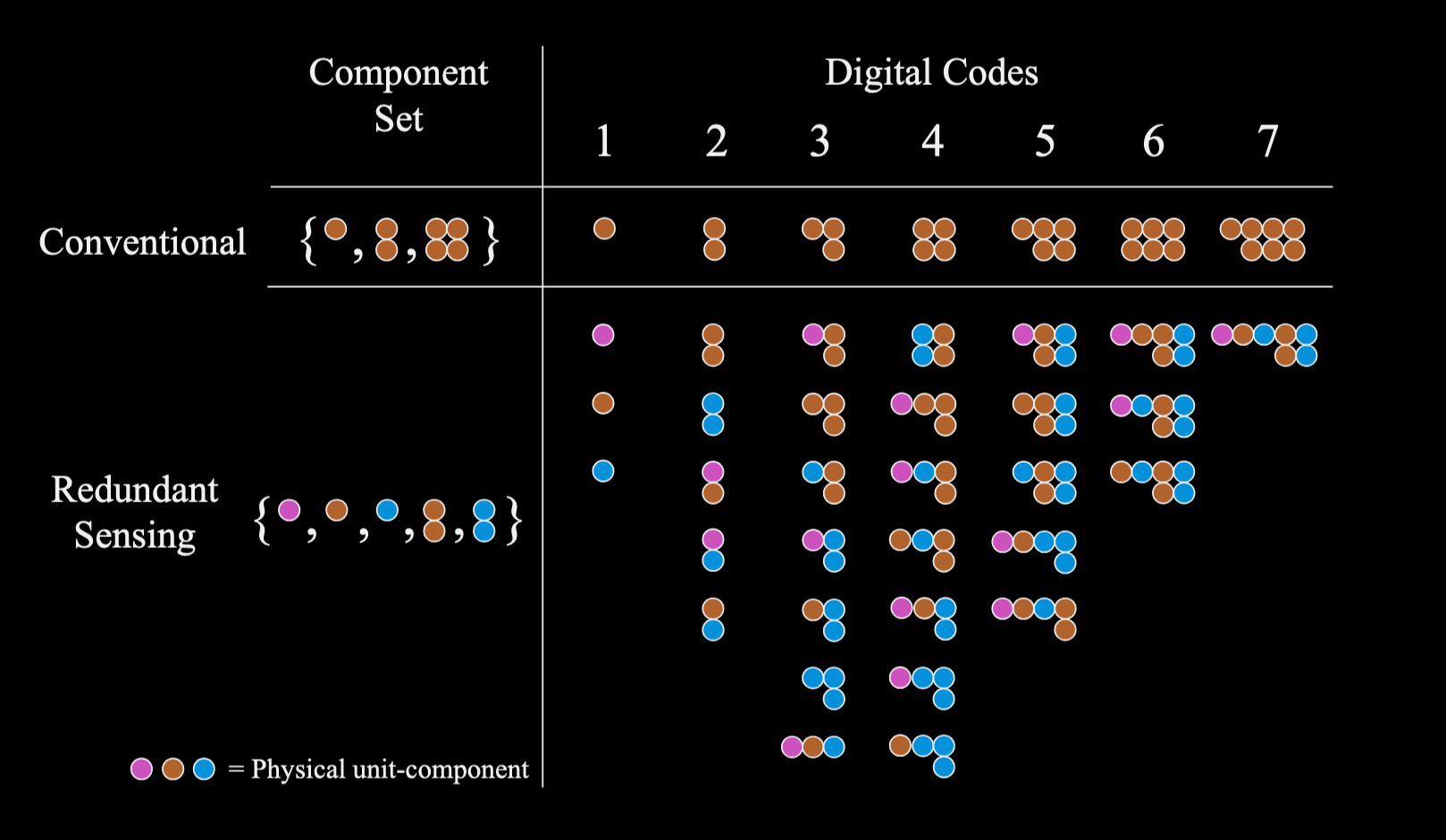
- RPR: (representational redundancy) redundant encoding of information
- non-orthogonal scheme of information representation
- hence favour non-homogeneous system design
- every entry of information can be encoded by numerous distinct system configurations, including the conventional one; aka. system microstates
- i.e. so that when some entries went missing, other entries could still loosely represent missing ones in-place
- non-orthogonal scheme of information representation
- ETR: (entangled redundancy) practical implementation of redundancy
- microstates must have some correlation: distribution of the microstates with respect to error cannot be independent, but partially correlated or entangled
- RPR: (representational redundancy) redundant encoding of information
- in almost all examples of RES (RPR + ETR), it appears to be an NP-optimization problem that can only be resolved by the mean of approximation.
- Biological processes overcome this challenge by harnessing the computational capacity of the nervous system, which is exceptionally adequate at approximation (e.g. visual and musculoskeletal system)
e.g.: redundant sensing system design
- (RS) the amount of computational power required to process redundant information increases rapidly with the number of sub-arrays.
- Two sub-arrays or two eyes is the minimum number necessary to create a redundant structure.
- (RS) the amount of computational power required to process redundant information increases rapidly with the number of sub-arrays.
- e.g.: animal binocular vision system (brain dedicates 50% of mass (cerebral cortex) to process visual information)
- It is therefore conjectured that binocular vision effectively creates a form of static redundancy allowing the brain to collect sufficient information to remedy the error and produce the images we perceive.
- During microsaccades, the field of vision of each eye is sampled multiple times by different spatial configurations of photoreceptors, which resemble entangled redundant microstates and facilitate visual acuity.
- microsaccades: small, rapid eye movements that occur when a person is attempting to fixate their gaze on a stationary object
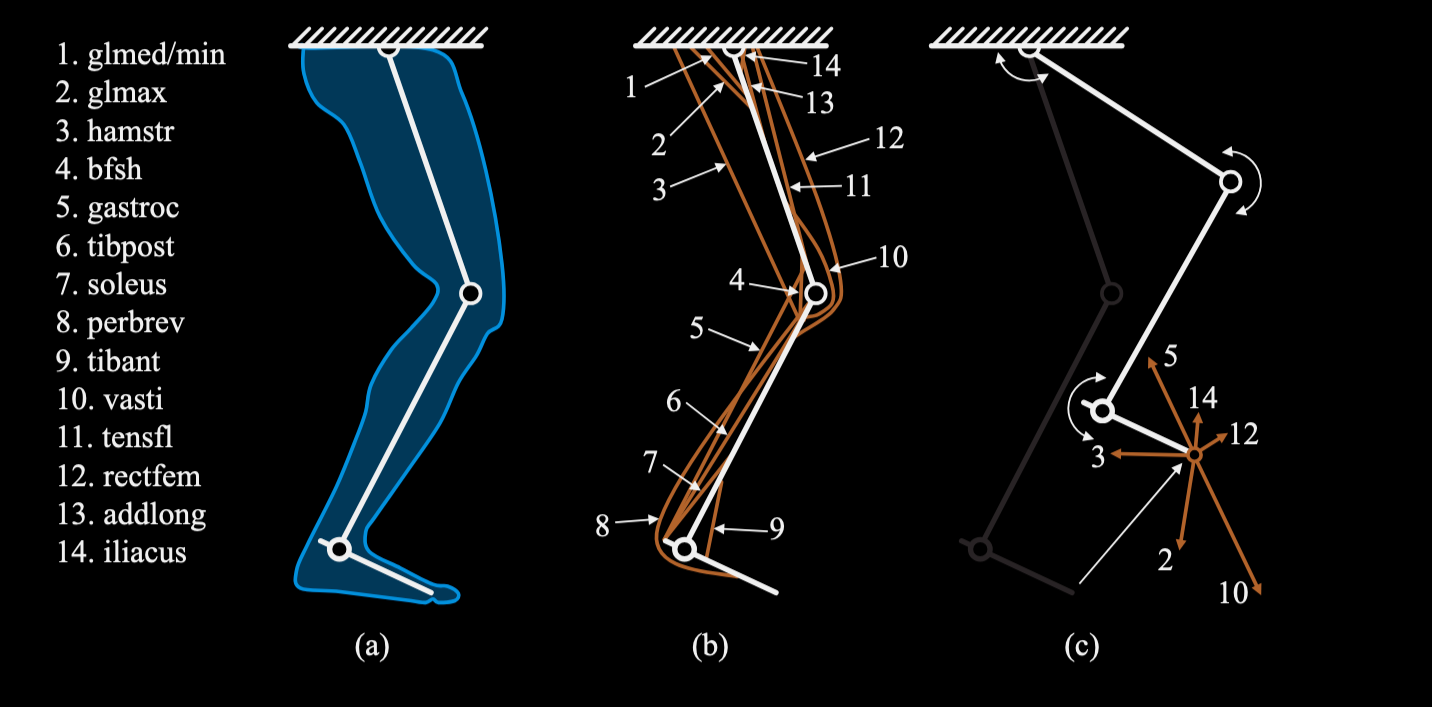
e.g.: human musculoskeletal system (HMS)
- The HMS has more muscles and joints than the necessary mechanical degrees-of-freedom even though are energetically expensive to produce and maintain
- e.g.: ResNet injects redundancy: “Therefore, we argue that by including the skip connections, the conventional DNN has been transformed into a redundant system with both RPR and ETR properties which leads to major enhancement of performance.”